Screens, Sleep, and Attention: What Parents Don't Realise

A child comes home from school cranky, unable to sit through homework, snapping over the smallest things. Most parents put it down to a long day, a difficult teacher, or simply a bad mood. Rarely does anyone trace it back to the phone that was in the child's hand until well past bedtime the night before. The connection between screens, sleep, and a child's ability to focus is far stronger than most families realise, and far more overlooked.
The Real Reason Behind the Restlessness
The light from a phone or tablet delays the release of melatonin, the hormone that tells the body it is time to wind down. Videos, games, and endless scrolling also keep the brain alert at exactly the point it should be settling. A child may still fall asleep eventually, but that sleep tends to be shallower and shorter than it should be, and the effects show up the next morning as restlessness, irritability, or a mind that keeps drifting off in class.
Why Parents Miss the Pattern
Phones are usually handed over with good intentions. A tired parent needs a quiet half hour, and a phone reliably delivers it. As a non-profit working on child welfare and development, Spreading Bliss Foundation understands why this happens, especially in households juggling long work hours and little support at home. The trouble is that the very thing meant to calm a child down before bed is often what keeps their mind switched on the longest. Teachers see the fallout at school: A child who cannot sit still or forgets instructions, but that behaviour rarely gets traced back to what happened at home the night before.
Signs Worth Watching For
- Trouble falling asleep even when clearly tired
- Waking up groggy or irritable despite a full night's sleep
- A shortened attention span, especially early in the school day
- Increased restlessness or mood swings through the day
- Resistance to any activity that does not involve a screen
What Helps, in Practice
- Set a fixed cut-off time for screens, ideally an hour before bed
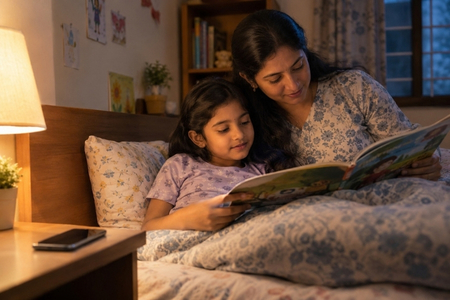
- Replace pre-sleep screen time with something calmer, like reading or a quiet conversation
- Keep phones and tablets outside the bedroom at night
- Stay consistent with the rule instead of making exceptions on tired days
- Involve the child in setting the limit, so it feels like a shared decision rather than a punishment
Small Habits, Bigger Outcomes
Families searching for the best non-profits helping children across India are often really asking one thing: Where can their support create outcomes that last? As a trusted NGO supporting underprivileged communities, Spreading Bliss Foundation has seen how small, consistent habits at home shape a child's ability to learn far more than most people expect, and a childhood where the smallest habits are not quietly working against a child's own potential.
If this resonates with you, there are simple ways to help. That could mean talking to the families around you about healthier screen habits, or supporting a child's education through your donations so they get a fair shot at reaching theirs. As a top NGO in India working on social welfare and community development, we believe small, steady steps tend to matter more than grand gestures ever do. So the next time a child comes home irritable and unable to focus, it may be worth asking not what happened at school, but what happened long after the lights went out at home.