Growing Up Too Soon: Childhood Responsibility in Low-Income Families
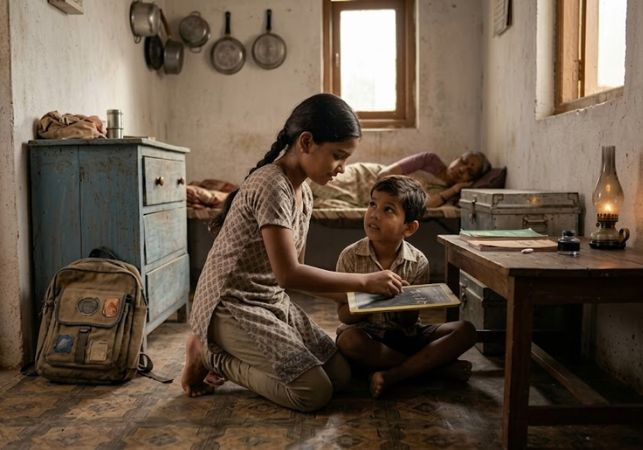
Childhood is meant to be a time of learning, play, and discovery. But for many children in low-income families across India, it becomes a period of responsibility far beyond their years. Instead of focusing on school or friendships, they often find themselves stepping into adult roles, caring for siblings, managing household chores, or even contributing financially. This early role reversal quietly steals away the innocence of childhood.
In many households facing financial hardship, survival takes priority over everything else. When parents work long hours or struggle with unstable income, children naturally step in to fill the gaps. An older sibling may become a caregiver, a young boy may take up odd jobs, or a girl may sacrifice her education to manage the home. While these actions stem from love and necessity, they place a heavy emotional and physical burden on young minds.
This caregiving responsibility can deeply impact a child’s development. Children forced into adult roles often experience stress, anxiety, and fatigue at an early age. They may struggle academically due to a lack of time and focus, or drop out of school entirely. Over time, this limits their opportunities, continuing the cycle of poverty. What appears as “maturity” is often a coping mechanism shaped by difficult circumstances.
Girls, in particular, are disproportionately affected. They are more likely to take on household duties, care for younger siblings, and sacrifice their personal aspirations. This not only reinforces gender inequality but also restricts their chances of achieving independence in the future.
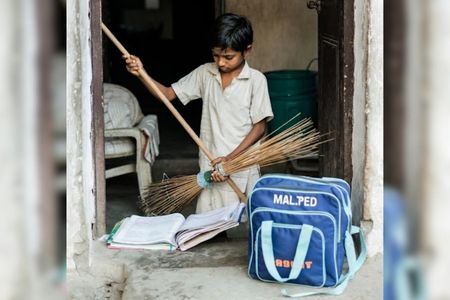
It is important to understand that responsibility itself is not harmful; children learning basic life skills is a natural part of growing up. The concern arises when responsibility turns into pressure, and when children are expected to function as adults without the emotional support they need. Every child deserves the right to grow at their own pace, without carrying the weight of circumstances they did not choose.
We recognise these hidden struggles. Through our community initiatives, we aim to support both children and their families by ensuring access to education, creating safe spaces, and raising awareness of the importance of balanced childhood development. We also work closely with communities to reduce the burden on children by encouraging shared responsibility and promoting the value of education.
Change begins with awareness and collective effort. When communities come together to support families in need, children are given the chance to simply be children again, to learn, to dream, and to grow without fear or pressure.
Because no child should have to grow up too soon.