Ambedkar Jayanti: Celebrating the Architect’s Legacy
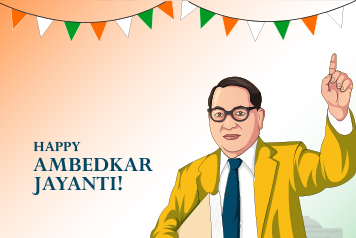
On 14th April, numerous people will be celebrating the birth anniversary of the man who changed the fate of the nation and made people conscious of human rights and dignity. This man is known as Dr B. R. Ambedkar and his birthday is often celebrated as Ambedkar Jayanti, Bhim Jayanti or Equality Day by some in India.
Ambedkar was a champion of Dalit rights, a group relegated to the status of untouchables in India, whose mere shadow was said to pollute the upper caste. Ambedkar himself was a victim of untouchability. He wasn’t allowed to sit in class with his upper-caste peers. He wasn’t even allowed to drink water from the school tap, an upper caste had to turn on the tap, which Ambedkar was forced to drink without touching the tap.
Despite the setbacks provided to him by his caste, Ambedkar persisted in getting a scholarship to Columbia University from Sayajirao Gaekwad III. He passed his M.A. exam in June 1915, majoring in economics, and other subjects of Sociology, History, Philosophy and Anthropology. In 1916, he completed his second master's thesis, National Dividend of India – A Historic and Analytical Study, for a second M.A.
“My five years of staying in Europe and America had completely wiped out of
my mind any consciousness that I was an untouchable, and that an
untouchable wherever he went in India was a problem to himself and to
others.”
- BR Ambedkar, Waiting For A Visa (1935-36)
Even after achieving so many accolades, Ambedkar wasn’t given the respect he deserved just because of his standing in the caste hierarchy. After arriving in Baroda after a long stay in the UK, he found it difficult to find a shelter and had to conceal his identity to stay in a Parsi inn, which he was thrown out of after his ruse was discovered. Ambedkar had to spend the night in the nearby park. He sat under a tree, with his suitcase, bedding and all his certificates and books strewn around on the ground.
In the following years, Ambedkar focused on liberating his fellow Dalits from the caste system. He started his movements in the 1930s. He demanded public drinking water sources open to all and the right for all castes to enter temples. He organized symbolic demonstrations to enter the Kalaram Temple in Nashik.
He adopted various means to safeguard Dalit rights. Ambedkar launched a movement against Dalit discrimination by creating public opinion through his writings in several periodicals such as Mook Nayak, Vahishkrit Bharat, and Equality Janta, which he started for the protection of Dalit rights.
In 1932, the Poona Pact was signed between Dr. Ambedkar and Pandit Madan Mohan Malviya to ensure the reservation of seats for the untouchable class in the Provincial legislatures, within the general electorate. These classes were later designated as Scheduled Classes and Scheduled Tribes.
"I measure the progress of a community by the degree of progress women
have achieved."
- Dr. Ambedkar
However, Babasaheb was not only a champion of Dalit liberation but was also one of the earliest examples of a feminist. In Mooknayak and Bahiskrit Bharat, sections were dedicated to women’s issues. He drafted the ‘Maternity Benefit Act’, which demanded equal pay and equal rights for female coal mine workers, ensuring that the question of maternity leave for women was brought up and they were protected under labour laws. He advocated for equal participation of women in both personal and professional spheres. He was also a strong believer in Reproductive Rights and urged women to make their own choices about conception.
A fact which has become lost to time, Ambedkar also didn’t have outdated views on homosexuality . In 1934, he defended the magazine known as ‘Samaj Swasthya’ by Raghunath Dhondo Karve. The magazine openly discussed subjects such as sex education, family planning and sexuality. Since he discussed homosexuality in his magazine, Raghunath Dhondo Karve found himself engaged in legal turmoil. In the defence of Raghunath Karve, Ambedkar referenced existing literature and research on the subject from modern society, including Havelock Ellis's work on homosexuality , asserting that there was nothing inherently wrong with people having such desires. They had the right to pursue happiness in their own way.
Ambedkar was an excellent champion of human rights, one of the few figures who ages well with time. We at Spreading Bliss respect Ambedkar and wish to live up to his legacy.
Please share this article with all your friends and family members to celebrate Ambedkar Jayanti.