International Women’s Day: Challenges Faced by Women in the Modern Day
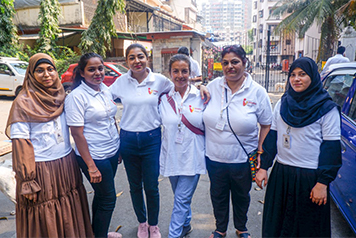
8th March is annually celebrated as International Women’s Day by women all over the world. The day first got legal recognition in the USSR in 1917. Subsequently, in 1975, The United Nations declared 8th March as International Women’s Day to address challenges faced by women pertaining to gender equality, reproductive rights, and violence and abuse against women.
While women have made a lot of progress when it comes to legal rights, more work still needs to be done as women are still treated as second-class citizens, not only in India but all over the world.
To mark International Women’s Day, we are going to talk about issues that women face even to this day in this article.
- Menstrual Taboos and Period Poverty
- Safety Issues
- Victim Blaming
- Education
- Marriages and Dowry
Period Poverty is described as having insufficient access to menstrual products, education, and sanitation facilities. Practising unsanitary menstrual habits poses a great risk to women and can lead to infections. This can be changed by educating women on menstrual practices. However, when mentioning menstruation itself is shunned, there is little that can be done. The first step in solving the problem is to destigmatize menstruation and make it normal for people to discuss menstruation.
Scrolling through social media exposes you to the fact that there is an epidemic of sexual violence against women. Rapes and sexual assaults are becoming more and more common. Women are not even safe in their own homes or among known people. A 2015 statistic revealed that 86% of rapes were committed by people known to victims.
Continuing on sexual assaults, women are often blamed for the crimes committed against themselves. This encourages the mindset that men hold no responsibility for their actions and it is the woman’s fault for invading spaces of men. Our society needs to hold men accountable for their actions and not limit women’s freedoms as it encourages more violent behaviour.
Women’s education is often neglected in favour of men. Women’s lack of education harms women as uneducated women are more likely to consider their condition as normal without imagining the possibility of a better world and more likely to be upholders of the patriarchal system.
Even though Dowry is an illegal and punishable offence. It is still widely practised among the populace just for the groom’s family to fatten their personal wallets. However, it is not only dowry that affects a woman in India, but marriage itself. Marriage is one of the biggest clippers of a woman’s wings. After marriage, women are expected to make major sacrifices. They often lose their support system and are encouraged to discontinue their careers. This greatly shifts the power dynamics in a relationship to a man’s favour.
After marriage, women solely exist within a man’s gaze and lose every semblance of joy and life as they only exist within the confines of marriage and not outside it.
Thank you for taking the time to read this article. Make sure to share it with all your friends and family members.